Photography isn't just about making memories, it's about art. Be artistic. Here are a few tips and tricks to help you make those photos, picture perfect.
To make those dull photos turn into works of art, consider these questions:
Decide if you want the full subject, half, or even a close up. How much background do you want, or even foreground? Exactly how close do you want that close up? What details do you want to focus on? Do you want a vertical, horizontal, or tilted photograph? What angle do you want? What's the best lighting? What background do you want to use?
1. Placing the subject of interest. Choose how much of the subject you want photographed. (Example: you want full body, half body, or face shot.) If your subject fills the frame then it's okay to center it. If you are trying to get more of the background, try placing your subject to the right or left in the viewfinder. With a horizontal (laying down), try to place them at the top for more foreground, or at the bottom for more background. And you could even tilt the camera for a more funky picture. It all depends on what part of the scenery you want visible in the picture. Maybe you want that tree to your left and your subject to the right. Or the patch of flowers in front and the mountains in back. (I find it best to take my time and take shots of each possible way and several different poses. This way I know I'll find the best photograph with the most potential.)
2. Don't center. The circle, plus sign, or brackets in the middle of your viewfinder is for focusing and isn't necessarily for centering the subject. Placing your subject in t he circle could leave you with a lot of empty and useless space on your photograph. Too much background and not enough subject. If your subject fills the frame then it is okay to center them. (Sometimes you just have to ignore the focus points and concentrate on your subjects placement in the frame instead.)
3. Camera angles. Walk around the subject, shoot from all angles and sides. This will help you to get the best lighting, background, and different aspects of the subject. You will want to find the best angle for all three. Pick a background that will not distract your viewers from the subject of interest. (I choose my backgrounds to where there's not much clutter. Sometimes I will use a plain sheet or blanket and place it behind the subject, but making sure it does not clash or blend.)
4. Reflectors. In some situations you just can't get enough light or you perhaps you just want more. To use a light reflector, place it in a position where it reflects light onto the subject without it getting in the frame. Use this if your shot is coming out too dark or there are too many shadows. On night shots that you need more than your flash can put out, place a lamp (or several) near your subject, but out of sight, and use the light reflectors to bounce from the lamps to where needed. (Some homemade light reflectors can be real cheap to make. You could use white cardboard, or if you can't find this, then simply take any piece and paint it white. For more light, place tin foil over your piece of cardboard, smooth it out, and reflect where needed.)
5. Shading. Using the same piece of cardboard as mentioned above, you can use this to block the light as well. You could make this easier by painting one side white and the other black. Or just place the piece in front of the lamp or sun to dismiss light from your subject. On most cameras you can use a sunshade for the lens, some cameras come with this, some you buy separate. This won't keep light from your subject, but it will block the light from causing a flare effect on the outcome of your photograph. The sunshade just clicks into place around your lens, and keeps the lens safe from any glaring.
6. Outside daylight. Direct sunlight is when you place the sun behind the camera, but in front of the subject. Using direct sunlight can cause shadows on the subjects face and possibly their eyes squinting. Back light is when the sun is behind the subject and in front of the camera. This will lighten the photo and cause much softer features on the subject.
7. Preventing red eye. Red eye is caused when the flash is too close to the lens. Ways to prevent this are: Attach a larger flash to your camera, t his way the flash is further from the lens. Or if buying a camera, look for one with the flash located far from the lens. Try getting closer to your subject when needing the flash. (Before I bought my camera with built in red eye correction, I had to use a photo editing program to correct these problems. I was even scanning my pictures and still having to edit when I was using my film camera that was hopeless against red eye.)
Wednesday, March 16, 2011
Photography Tips and Tricks

Primer: Perhaps the Smartest Sci-Fi Film of All Time
If your all time favorite science-fiction movie stars California’s governor, please stop reading this review now. Still here? Good because in all likelihood you have not heard of Primer, a newly released DVD from Shane Carruth. This film is a must see for any serious sci-fi fan or for that matter any serious connoisseur of fine independent cinema. This intellectually challenging movie was made for just $7,000.00 in the summer of 2001. That was one fantastic investment since it earned more than $425,000.00 in a limited theatrical run and won the 2004 Sundance Film Festival Grand Jury Prize. The film tells the story of Abe (David Sullivan) and Aaron (Carruth), two young, hard working, and ambitious engineers, who spend their evenings and weekends trying to become the next Steve Jobs and Steven Wozniak (the founders of Apple Computer for the trivia challenged) by creating and patenting new inventions in Aaron’s garage. While fine tuning one of these inventions, a machine which can counteract gravity, lowering an item’s apparent mass, the boys inadvertently discover that their device has some, well, unexpected capabilities too. Being careful not to spoil the story, it is fair to say that one of these capabilities seemingly allows Abe and Aaron to do just about anything they want and earn a ton of money in the process. From there the film looks at how absolute power affects the duo and examines how they deal with the consequences of their actions. To put it mildly, their lives change in unexpected and astounding ways. The plot is complex and void of exploding cars, supermodels dressed like hookers, and most of the normal Hollywood fare, in other words it is well written, if not a bit ambitious considering that many moviegoers will be challenged. The film is visually interesting, intense, and image driven. Viewers will find it hard to believe that much of the movie was filmed at Carruth’s parent’s house and a U-haul storage center. Almost a complex as this fine film’s story line, is the story of just how this movie was made. Carruth, who is math geek, wrote, directed, filmed, stared in, edited, and scored the movie. Carruth had worked at three engineering-oriented companies, but hated it. Then turned to writing short stories and novels, but soon realized that was not for him either. Eventually, Carruth hit on the idea of becoming a filmmaker. It didn’t seem to matter that he did not have the least idea about how movies were made. Carruth had very little money to invest in his new career, so Primer was made on a real shoe-string budget, but you wouldn’t know it from watching the movie, which looks every bit as good as major movies that can cost millions of dollars. In fact, Carruth’s tiny budget forced him to be creative, it almost makes you wonder if Hollywood should try forcing more filmmakers to be creative. The bottom line is that this PG-13 rated (for brief language) film is an excellent example of modern cinema well worth watching.
The Creation of Art is Subjective

credit
The Creation of Art: A Review
The Creation of Art: New Essays in Philosophical Aesthetics edited by Berys Gaut and Paisley Livingston is a great book. As a person who loves art, I was excited to read a book dealing with art from a philosophical perspective. I was particularity impressed with the essays talking about genius and creativity. Therefore, these essays will be the focus of my review.
According to Guyer, genius is a gift for invention. This gift leads to originality in representation (Guyer116). He also claims that what the genius does is that he uses art to represent the freshness of nature (Guyer122). By stating this, I believe that he wishes us to see that when the genius uses nature as his canvas he wants whatever he paints or sculpts to be as fresh as the outdoors themselves.
I agree with Guyer's definition of genius. A genius doesn't just make a copy of what he sees in nature. Anyone with a small amount of artistic talent could do that. A genius seems to be able to take what he sees and shape it in such a way as to make it his or her own. For example, an artistic genius might paint a rose blue instead of red or pink. A statue may be sculpted out of gingerbread cookies instead of clay. A poem can describe the sunset as ‘rainbow sherbet melting in the sky'. Artistic genius seems to spark imagination. I also enjoyed the way he described Kant's view of what a successful work of art entails. A piece of artwork qualifies as a success when it brings human beings pleasure because its form and content starts a free play with our imagination and understanding (Guyer 127). This makes sense because some of the poetry that I write is inspired by what Kant calls ‘successful artwork'. For example, the first time I saw Van Gough's "Starry Night", I wrote a poem entitled "Imagine the Night Sky."
I also like the fact that Cohen states that human beings who appreciate fine art must posses a bit a genius (Cohen 145). This is because it seems that we are geniuses when we can appreciate Shakespeare or Van Gough. It seems that being a genius isn't ass hard as first appears. It seems that all it takes to be a genius is the ability to change the ordinary or the ability to appreciate the extraordinary. However, it is unclear what it takes to be an appreciator of fine art or to have something labeled an appreciator of fine art. It is also unclear how much an artist must change something to be called a genius. Therefore, being labeled a genius isn't a clear cut decision. In other words, many factors may play a part in being labeled a genius.
Olsen does good job talking about creativity. I like the way that he uses Shakespeare to describe what poets do. Shakespeare claims that a poet's pen "gives to an airy nothing a place and a name" (Olsen 192). This description reminds me of Plato. According to Plato, the Muses are vital to poets: "If anyone comes to the gates of poetry and expects to become an adequate poet by acquiring expert knowledge of the subject without the Muses' madness, he will fail" (Phdr 245a). The Muses seem to help the poet's pen give life to nothing.
The discussion of the creative personality is provocative. Creative people may have non-conventional thoughts. This may be due to a need to resist being mainstreamed on society. A creative person wishes to give into his or her own unique nature (Olsen 196). I think that a creative person can have a unique nature and still create a painting, poem, or short story using a very structured regimen. In other words, creativity doesn't have to give way to convention and structure. One thing that a creative person might create is a fictional character. However, many philosophers have argued that fictional characters can't be created. I don't agree with the idea that fictional characters have no reality at all. It makes more sense to believe that fictional characters come into being only because of the mental and physical acts of an author. Because of this, fictional characters have become part of most cultures.
While most of this book was informative and interesting, one essay that I read was boring. The essay deals with the origins of creativity. The explanations of the origins of creativity are cognitive, biological, and social. The argument seems to be that creativity comes from all three sources. This comes as no surprise to me. In addition, the biological portion of the essay was a bit confusing.
This book is worth reading because it stimulates and educates readers. Also, it has put art in a new perspective for me. For the most part, people will not need a background in art to understand and enjoy this book; therefore, I recommend this book.
1
Friday, March 4, 2011
Baby Shower Gifts Under $10
boston celtics baby clothes
The pitter-patter of little feet is always a joyous sound to your ears, but all those baby shower gifts are draining your savings. You don't have to blow a bundle on adorable toys and outfits to create a memorable baby gift. The next time you get invited to a baby shower keep these great $10 or less gift ideas in mind:
1.)Babysitting Coupons: This gift will only cost a bit of your precious time. Print up cute certificates offering hour-long babysitting sessions. The mom-to-be will adore a baby-free afternoon and the chance for a pedicure or uninterrupted lunch.
2.)Movie Package: Buy a pre-owned DVD ($5 or less on Amazon or eBay) and package it with microwave popcorn - it could be awhile before the new parents can get back to a movie theater.
3.)Mix it Up: Burn a CD of your favorite, upbeat, baby-friendly tunes. The Beatles, ABBA and Simon and Garfunkel are always popular with kids. Your friends will thank you for saving them from suffering through an endless loop of Raffi.
4.) Subscription Prescription: Give the new parents a subscription to a parenting magazine like FamilyFun ($9.95 for ten issues), Parent & Child ($9.97 for six issues). This gift will outlast any clothing purchase and promises to deliver monthly tips on childrearing. Look for discount subscription offers online or special "2-for-1" subscriptions.
5.)Meal Solutions: Offer your personal chef services. The new parents will love having a night off from cooking or a break from the monotony of take-out cuisine. Make sure you show up with all the ingredients and clean up after yourself.
6.)Start a Baby Book: Carry a colorful notebook, Polaroid and colored pens to the baby shower. Snap away and while the mom-to-be is busy opening gifts, you'll have attached the first few photos in her new baby book.
7.)Pacifier Package: Pacifiers (a.k.a. binkies, nuk-nuks and soothers) are small and inexpensive, but extremely practical. Baby superstores sell two-packs for $3. Purchase two different brands and add a pacifier "leash" ($2.95). These little items always seem to get lost; any mom can use a plentiful supply.
8.)Create Your Own Layette: Purchase a 3-pack of onesies ($9 or less) and put your creative energy to work. Embellish the onesies with nontoxic paint pens and markers to create fun designs for the baby.
9.)Start a library: Scout out local yard sales and snap up vintage baby books. Look for volumes in good condition and check for missing pages. Try to stick to theme: Dr. Seuss, Beatrix Potter, etc., and make sure to wipe down the pages before wrapping.
10.) Hospital Help: Offer to take care of Fluffy or Fido while your pal heads to the hospital. Keep your schedule open for the weeks preceding the delivery and get a spare set of keys and care instructions.
These thoughtful gifts will be deeply appreciated and more memorable than yet another bear sweater or plastic toy. Use your creativity and save your cash.
Sunday, February 27, 2011
Photographer Interview: Break into Concert Photography
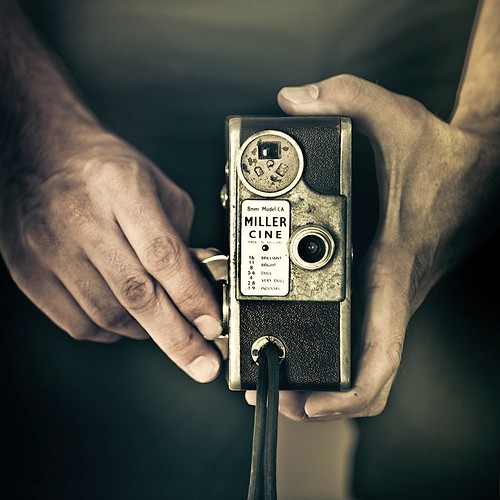
Photo Credit: celtics baby clothes
Anthony Siciliano of Ramsey, NJ, was initially attracted to photography through some playful competition with his friends. Even when he realized his friends had no idea how to use their cameras, he stuck with it and earned recognition in photography and videography.
As a photojournalist and concert photographer his experience is transferring into his newest venture as part of Awesome Farm - a video production and photography business formed with his friends. At least with the friends that know how to use a camera.
Siciliano answered a few questions and gave some advice for fellow photographers looking to break in to photography, specifically concert photography and photojournalism.
What was your first camera?
My first DSLR was a Nikon D80 with the 18-70 mm lens. However, the first point-and-shoot that I bought for myself was a Pentax Optio S-40, which I still have. I really enjoyed taking pictures of flowers, but I was dissatisfied with the performance and results of my point-and-shoot (particularly, the shutter lag). I looked into DSLRs, and ended up purchasing the D80. Thousands of dollars, and much gear later, here I am.
What photographers - well known or unknown - inspire you?
I really have fun with concert photography, live shows where I bring back photos that give you a good sense of what happened during an event. A photographer that does this very well is Todd Owyoung. His website is http://ishootshows.com/. Not only does he get awesome results, but also he shares his wealth of knowledge with everyone, which I respect immensely.
Check out the Strobist blog as well. It features off-camera lighting and lots of DIY equipment at http://strobist.blogspot.com/.
Is there a certain piece of gear you could not live without?
I do not skimp on my gear, and it has definitely paid off. In my opinion, it is better to save up for a longer time and get better equipment, than it is to spend early on something else. Unfortunately, I am addicted to buying new things, which can get very expensive. I could not live without any of this stuff, but if I had to pick one lens, the one that does most of my work is the 18-70mm lens.
Do you have any goals in mind with your photography?
I hope that I will be shooting famous bands very soon. A lot of doing that is getting to know the people who run the events, and the people who manage the bands. So far, the most famous people I have photographed in concert are Kate Voegele, Jack's Mannequin and the rest have been local bands. Currently, I shoot for local newspapers. The pay is not very good, but it is fun and better than nothing at all. Doing this will help me get exposure.
What advice would you give to someone who wants to shoot concerts?
The gear that is best for concert photography, at least in my opinion, is fast lenses and cameras with high ISO abilities. It is deceptively dark inside most music venues. My 50 mm lens does a lot of work there, with its extremely fast 1.8 aperture. My other lenses that go down to aperture 2.8 are extremely important. Large wide-open apertures are important for catching performers in action, without blur. Someone that wants to shoot concerts should definitely invest in a 50 mm lens, and save up to buy other fast lenses. Many places do not allow flash during performances, and your brand-new flash unit will not do any good when security tackles you. Also, watch out for drunken people and mosh pits at shows, which is a good way to wreck your camera.
How did you get a job with your local newspaper? What skills does that require?
When I was doing physical therapy for my tendinitis, I met a photographer who was shooting some photos for a brochure. We got to talking, and she gave me the contact info of a local photo editor. The skill involved in photojournalism is the same most other photographers use, except more irritating. Not only do you have to capture good pictures, but also you have to do it consistently, and make sure you get people's first and last names. If you do not get their names, editors will not use your photos. That can be a big disappointment, after all your hard work. You also have to be versatile and ready for anything. Get to events early and scope things out. that is the best advice I can give. Coming in late and not getting a good spot makes things a lot more difficult.
What advice would you give new photographers?
The best way to learn photography is by doing. When I bought my camera, I barely knew how to use the thing. One great thing I think everyone should do is a Project 365. That is where you take one photo per day (at least) and write a little bit about it on your Flickr account or a photo blog. It will help you learn to shoot in all current situations as well as on days or times where you think a camera might not be convenient to have. Then, at the end of the year, you look back and see how much you have improved, as well as your year in a series of photos. Also, do not forget to take a break when you are post-processing your images. I got a bad case of tendinitis from using the computer too much, and it really puts a kink in your photography.
Where can people see your photography?
Check out my photography on my Flickr site at: http://www.flickr.com/photos/scis/ and soon at www.awesomefarm.com.
Where to Find Great Black and White Photography Online

photo source
Black and white photography looks great in any décor. You can find just about anything, in any size, to match just about any room. Plus, the neutral tones of black and white photography ensure that it will match just about any color scheme. Here are some of the best places on the web to purchase black and white photography.
AllPoster.com
AllPoster.com is a fantastic site for cheap artwork. Now, cheap doesn't mean poor quality - quite the contrary, in fact. You can find just about anything - traditional paintings, classical art, black and white photography, large posters of bands, musicians, movies and more. They also offer framing.
My Top Pick: "City Street Signs" by Nelson Figueredo - $24.99 (Price doesn't include shipping and handling, or optional framing.)
Why I Chose This Piece: I love New York, more importantly - I love Broadway. Of course, Broadway and West 34th Street is practically the center of the theatre district. It's a great way to bring a little bit of Broadway right into my own home.
The Wall Art Store
This online store has a lot of fantastic, very 'artsy' black and white photos. They offer free shipping and all of the photos come framed, they even offer a few different selections for matting and frames. However, prices can run you from $55 dollars and all the way up to $919. Ouch. However, the quality is very high - so you can be sure you're getting your money's worth.
My Top Pick: "Stonehenge Sunrise" by Matthew De Haven - $50.00 (Price does not include shipping, handling or frame.
Why I Chose This Piece: I love Stonehenge, it's a fascinating place. The fog adds to the mystery of the structure and it's a great piece to add to a global photography collection.
Artful Home
This website offers a lot of wonderful photographs, but the prices run fairly average. The bottom line photographs start at $110 dollars and run up to several thousand dollars - so this isn't the most budget friendly site. However, if you've got the extra cash lying around, it's a great option and chances are you'll spend similar amounts at local art studios, especially if you live in a metropolitan area.
My Top Pick: "Winter Trees I" through Phoenix Galleries - $299.00 (price includes free shipping as well as framing and matting.)
Why I Chose This Piece: This particular photograph would be great for my fiancé's office. He loves the look of trees in the winter, so this is a great piece for him.
AbsoluteArts.com
Absolute Arts caters to the United States, the UK, China and more - and their prices range anywhere from $10 to $1,000,000. With more than 2500 works of art, you'll be sure to find exactly what you're looking for with this website.
My Top Pick: "Merced River Ice" by Ron Gallmeier - $330, Small; $665, Medium; and $1000, Large.
Why I Chose This Piece: Again, this is another piece I know my fiancé would really appreciate. Plus, I love the look of the water, the snow and the trees - so it's something we would both really enjoy in any room of our home.
So whether you've got $10 or $10,000 - you'll be sure to find the ideal pieces of black and white photography to fit your home décor and personal tastes.
Saturday, February 26, 2011
Tips for Breaking into Sports Photography
credit,image source
Winthrop University, Rock Hill, SC, student photographer Chris Osborne hopes his experience in sports photography will take him to the next level - his goal for every shot is "Sports Illustrated Cover".
Osborne explains how a sixth sense is valuable in sports photography, but without the basics of photography, you will still miss the shot.
What first attracted you to photography? How did you get started yourself?
Photography was something I could do since I have always been able to see how I wanted things to look. I have started and restarted a few times. My first camera was a 110 mm back in 3rd grade. I moved onto other interests until college, where I got a Coolpix L3. It is good for general use, but trying to shoot basketball did not work at all. So, I purchased a Rebel XT and have not looked back.
What photographers - well known or unknown - inspire you?
Beyond the sports photography culture, two unknowns got me where I am today. The first is my sister. She says that I stole her interest in photography and will not hold back any criticism of my work. The second is Paul, a fellow photographer at the school paper. After seeing one of his pictures in the paper and not liking it at all, I decided that I could do a better job and filled the other sports photographer position. Only later did I learn that an editor and not Paul made the cropping decisions.
What equipment do you use? Is there a certain piece of gear you could not live without?
I am currently using a Canon Rebel XT with the kit 18-55mm lens, Canon 50mm 1.8, Canon 75-300 4-5.6, and a Tamron 28-200mm 4/5.6. My only other add ons are a Canon battery grip and a polarizing filter. Being on a college student budget, I do not buy new equipment unless I will really use it. But if I had to pick one item that I couldn't live without it would be the battery grip. I missed too many shots by flipping the camera the wrong way to shoot vertically or simply missing the shutter button.
Do you have any goals in mind with your photography?
For my sports shot, there is always one basic thought running through my mind - Sports Illustrated cover. I would love to have one someday. For everything else, I think about if I could see the shot hanging on someone's wall. If I cannot, I find something that fits that requirement.
What do you feel are your strengths and weaknesses in sports photography?
As much as I hate to say this one, one of my strengths is that I have a camera that can handle the speed and lighting at college sporting events. Beyond that, I am able to have a personal relationship with most of the athletes and am able to predict fairly well what is about to happen. My weaknesses are that I am still too slow at times to get the shot that I want, despite knowing almost exactly what is about to happen and that I have a tendency to tilt my camera. Also, where the Winthrop athletic department lets me go during games limits what I am able to shoot.
What does it take to be a quality sports photographer?
To be a quality sports photographer, you have to be a little bit psychic. By that I mean that you need to be able to know where to point the camera to get the shot. Some sports are easier than others. What sports do you like to shoot? I like to shoot basketball and volleyball most. They are high intensity and usually have something new to get every time. I like baseball the least because most of the shots are just excessively similar.
What post-processing tools/software do you use? How much does that influence your photography?
When I want better control over the photograph, I will use Photoshop 7 or Gimp depending on which operating system I am working under (desktop runs XP while laptop is in the process of switching over to Linux). I use Picasa for basic editing such as cropping and overall brightness/contrast. I sacrifice the overall control for speed when I have to turn things in to the school paper.
What advice would you give new photographers?
A) Don't get discouraged. Photography is an art, which means you will have to work at it.
B) A good photographer can overcome bad equipment, and good equipment will not make you a good photographer.
C) Less time editing your photographs means you'll have more time to take more, so get things right in camera as much as possible.
D) Try to see all of what there is to shoot, not just the stereotypical snapshots that everyone else will find.
Check out Osborne's photography at http://sapidexistence.com